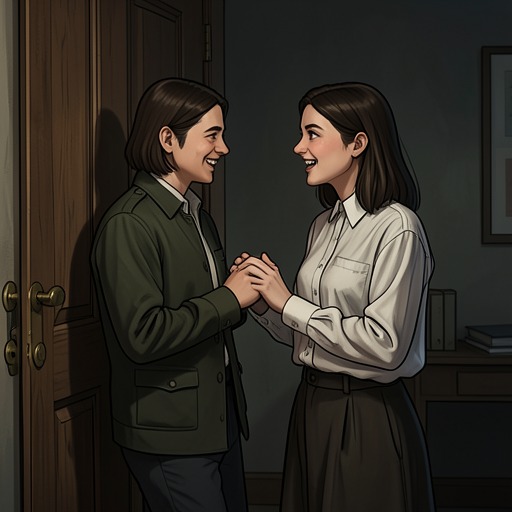
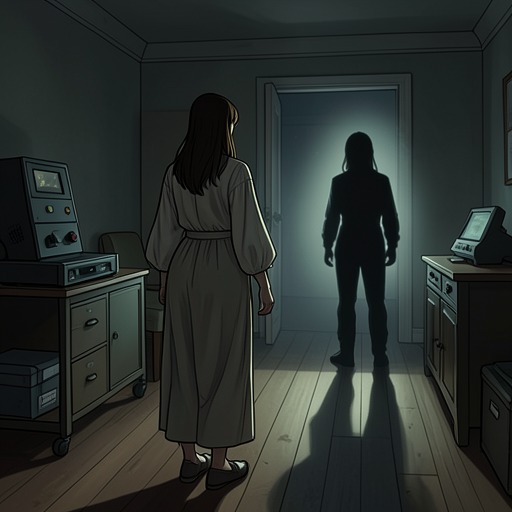
Carson Bradley and Stiles Stilinski
Holding Out for a Hero ▸ Stiles Stilinski (2)Carson Bradley and Stiles Stilinski begin as inseparable childhood friends and become romantic partners without abandoning the history that made them each other’s safest constant. Their relationship joins ordinary adolescent intimacy—school gossip, shared jokes, music, films, and flirtation—to the dangerous supernatural world surrounding Beacon Hills. Its decisive significance lies in the way companionship becomes a form of survival: Stiles draws Carson into investigation and danger, while Carson’s presence steadies him, protects his emotional world, and gives their increasingly chaotic lives a recognizable center.
Identity and Foundation
Carson and Stiles have known each other since they were three, long before either understood the secrets beneath Beacon Hills. Stiles’s habit of dragging Carson and Scott McCall into reckless adventures is presented as an established pattern rather than a new development; even the decision to search the woods for a dead body follows the familiar logic of their childhood friendship. Because Stiles’s father is the sheriff, he can listen in on local emergencies, and Carson accepts his access to town secrets as part of the package that comes with loving him as a friend.
The bond is also shaped by shared loss. After Mrs. Stilinski dies, Carson reveals that her own mother left her life in a similarly devastating absence. Her mother disappeared without a note or explanation while Carson was visiting Stiles and Scott, leaving behind only the cookies she had been baking. Stiles responds with a weak, sympathetic smile because her parents, like his own family history, are a painful subject. Their closeness therefore rests not only on familiarity and amusement but on an ability to recognize abandonment in each other without demanding that it be explained away.
From Friendship to Romance
The transition from friendship to romance is gradual but retrospectively long-established. Carson describes herself and Stiles as part of the original trio that survives the first supernatural crisis together, more cautious, hardened, and grown up after witnessing death. Only afterward does she acknowledge the additional change: she has fallen for Stiles, and he had already fallen for her. The relationship feels less like an abrupt replacement of friendship than the naming of an attachment that had been present beneath it.
Their physical intimacy is repeatedly framed through small gestures rather than grand declarations. At the hospital, Stiles sleeps across three waiting-room chairs while the get-well balloon for Lydia Martin remains tied around his wrist; Carson brings him there when she visits Lydia, and Mr. Martin learns that Stiles has been present through the weekend. When Carson sits beside him, Stiles reaches for her hand by instinct, intertwining their fingers, and she rests her head against his shoulder. The gesture turns an uncomfortable hospital vigil into a private space of mutual belonging.
Their flirtation retains the awkward humor of their earlier friendship. Stiles’s dream about Carson becomes embarrassing when she admits that she heard most of it, and his hope that they might act on it outside the hospital is met with her skeptical teasing. Elsewhere, their joking about how long they have supposedly been in the relationship becomes a conversation about permanence. Carson shyly observes that Stiles makes it sound as though they will be together forever; he answers that he would not mind that. The exchange matters because Stiles imagines a shared future before Carson has decided what she wants to do with her own life.
Their declarations are similarly playful and sincere at once. After Carson tells Stiles to go home, he bends to kiss her again, cupping her cheeks as he does so. She says that she loves him, and he answers, "Forever." Carson immediately calls the answer cheesy, but the mockery does not undo the promise. It is characteristic of their relationship that tenderness arrives disguised as a joke and that a joke can carry the weight of an oath.
Shared Life and Protective Attachment
Carson and Stiles continue to inhabit the ordinary rituals of school life even while supernatural events intrude upon them. Carson searches for Stiles during lacrosse practice, notices him at the end of the line, and privately thinks that he looks attractive in uniform. She attributes her own Star Wars references to the time Stiles has spent watching the films with her, showing how their relationship fills even mundane observation with accumulated shared culture. His influence appears in her language, while her attention remains fixed on him amid the crowded school setting.
At the ice rink, their attachment becomes explicitly protective and regulating. Carson is afraid of falling, but Stiles holds her and pulls her along until the rink no longer seems entirely threatening. She describes him as making her strong and keeping her sane, comparing his function in her life to the anchor associated with a werewolf’s control. In his arms, the dangers posed by Derek Hale’s alpha status, the newly created werewolves, and the creature that has broken into Carson’s house become momentarily small. The scene does not erase the danger; it shows how intimacy creates a temporary counterforce to it. Stiles tells Carson that he loves her in this suspended moment, just before Lydia’s scream breaks the illusion of safety.
Their relationship also extends beyond private affection into mutual participation in the group’s emergencies. Carson’s first involvement in the supernatural begins because Stiles and Scott refuse to let a peaceful night remain peaceful, and she remains part of the trio after Scott is bitten and the conflict with the Argent family begins. Even when Stiles’s instincts lead them toward trouble, Carson does not simply detach herself from him. Their loyalty is simultaneously the source of exposure to danger and the means by which they confront it together.
Conflict, Jealousy, and Emotional Recognition
The relationship is not insulated from ordinary adolescent conflict. At school, Carson and Allison Argent share nearby lockers because their surnames place them together alphabetically. When Carson and Allison are not speaking, the arrangement becomes awkward; once their disagreement is repaired, the same proximity becomes an opportunity to gossip. Stiles’s constant ability to create trouble—Allison asks how he managed detention within the first five minutes of class, and Carson can only answer through the familiar logic of "It's Stiles."—is part of the comic friction surrounding the couple.
Carson also has to confront the fact that Stiles’s attention can be diverted by spectacle. When a glamorous blonde enters the cafeteria, Stiles and Scott stare too intently, prompting Carson to hit Stiles on the arm. The scene is minor beside the supernatural plot, but it places their romance within recognizable patterns of teenage jealousy and reassurance. Their bond is not idealized as effortless; it is maintained through teasing, correction, embarrassment, and the repeated choice to return to one another.
Carson’s history with Jackson Whittemore further clarifies what makes her relationship with Stiles different. Jackson once broke up with Carson for her best friend, but she has moved on and concludes that they were simply bad together. Her later defense of Jackson before Lydia Martin distinguishes forgiveness from romantic nostalgia. By contrast, Stiles is the person who has remained present across childhood, grief, danger, and change. Carson’s emotional judgment is therefore not based on ignoring harm; it is based on recognizing which relationships can survive conflict without losing their underlying care.
Development and Narrative Significance
Carson and Stiles’s relationship develops against the book’s movement from suburban normality into supernatural crisis. The story begins by presenting Beacon Hills as picturesque and safe, then identifies it as a beacon for the supernatural. Carson’s memories place Stiles at the origin of the transformation: his eavesdropping leads them into the woods, where Scott is bitten, and the friends must reinterpret their lives through the language of werewolves, hunters, and monsters. Their romance consequently grows inside an environment where secrecy and danger make ordinary trust unusually valuable.
The pair’s shared media habits reinforce that development. The book’s playlist includes "Holding Out for a Hero," "Castle Walls," "Beside You," "Save Me a Spark," "Thousand Needles," "Everlasting Love," "The Love Club," "Favorite Record," "Let It Go," "Blue," "Cold Water," and "Cliff's Edge," while Carson’s Star Wars joke shows how cultural references become part of the couple’s private vocabulary. These elements also reveal the serial, fan-created form in which the relationship is presented: the author announces progression into Season Four, hopes to reach Season Three before that season is halfway over, and later states that the chapter is the last chapter of Holding Out for a Hero while promising an epilogue and a third book. Carson and Stiles’s story is therefore emotionally intimate but structurally ongoing, sustained by continuation rather than closed by a final resolution.
Their strongest narrative function is to oppose isolation. Carson’s mother disappears without explanation, Lydia disappears into a supernatural mystery, and Scott’s bite separates him from ordinary human life. Against these patterns of disappearance, Stiles and Carson repeatedly remain physically and emotionally available to each other: he waits beside Lydia’s hospital room, reaches for Carson’s hand, holds her on the ice, and answers her declaration of love with "Forever." The relationship turns endurance into a shared practice. It does not make Beacon Hills safe, nor does it prevent the couple from being frightened, jealous, or hurt, but it gives both characters a durable language for choosing one another while everything around them changes.